Showing posts with label Early Literacy. Show all posts

Tuesday, November 10, 2015

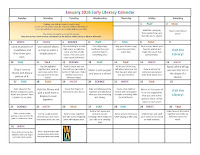
YSS Early Literacy Calendar

Literacy Calendar

This project is brought to you by the Youth Services Section of the Wisconsin Library Association and awesome librarians from all over WI contributed to it.

The calendar offers caregivers 365 days of tips on how to raise a reader.

http://wla.wisconsinlibraries.org/images/yss/2016_Early_Literacy_Calendar.pdf

Monday, November 9, 2015

Early Literacy Apps in Storytime

I was on an ILEAD USA- WI team which was a nationwide leadership immersion program utilizing web technologies. One of the other teams of 2015 was the Early Literacy Innovators. Here is a short video offering tips and suggestions on how to incorporate apps into storytime and the value of including the.

Other apps for early literacy resources for librarians, parents and caregivers:

http://littleelit.com/

https://www.pinterest.com/clearwaterlib/early-literacy-apps-for-kids/

https://www.pinterest.com/carisakluver/apps-for-early-literacy/


Sunday, November 8, 2015

20 Year Study on the Impact of Books in the Home

Whether you fill your home with books bought from a garage sale, from a bookstore or borrowed from the library, having books in the house for your children can have a major impact on their lives.


From Dr. Mariah Evans' 20-year study, she has formed some hypotheses:
  • Reading with very small children -- and talking about the books as you read -- makes a big difference.
  • Homes in which books are used to adjudicate questions of fact, rather than debating them as though they were matters of opinion, make an important contribution to childrens learning strategies.
  • Children watch what their parents do, so reading at home is very important in a role-modeling sense.
  • Children gain skills and culture/content from the books in the home. These skills and content help children perform better on standardized tests.
  • Bookish homes help children like school and see their teachers as valuable coaches. Both performing well and liking school encourage youth to persist in education, even when the going gets tough.

Tuesday, May 21, 2013

Zoophonics

Using an animal alphabet helps children remember the shapes and sounds of the letters which are aspects of letter knowledge, one of the six skills of early literacy.

Letter sounds are taught before letter names. Lowercase letters are taught before capital letters. And including body movement for each animal letter helps to reinforce the connection between letter sounds and letter shapes. Learning is greatly enhanced when movement is involved.

Zoophonics helps close the gender gap when it comes to learning language. Boy's brains are wired in a way that makes language a more difficult skill to acquire and use effectively. Studies show that early childhood language and learning activities must be paired with movement and the use of manipulatives.

The Zoophonics materials will be available for checkout at the library soon!


http://www.zoo-phonics.com/ Visit the Zoophonics website to learn more about their products!

Wednesday, August 22, 2012

Word Family Worms from Kizclub


The Kizclub is a great site for early literacy ideas! These are Word Family Worms that you can print and make. All you do is slide the window to form a word and the picture of that word shows in the other window!

Checkout the site http://www.kizclub.com/index.html

Monday, June 11, 2012

Toddler Fingerplays and Action Rhymes

Here is a great link to a file from the Center of Early Literacy Learning that describes how to use rhymes, fingerplays, songs and activities in your everyday lives to help your child develop early literacy skills!

http://www.earlyliteracylearning.org/cellpract_parent/toddler/collections/CELL_Todd_Rhy_Sound_Aware.pdf

Tuesday, June 5, 2012

Babies & Books

When you hold your baby close and snuggle together with a book, your baby enjoys hearing your voice and feeling your touch and this positive experience of feeling loved and secure helps build your baby's love of reading!

Talk to your baby all day long. Tell them that you are doing the laundry or washing the dishes or making dinner. Describe the weather outside, talk to them as if they understand perfectly what you are saying (of course, don't wait for a response!). Ask questions- they will notice the rising intonation.  By simply listening, your child learns words, ideas and how language works. They also learn the patterns of communication and conversation.
Moo, quack, meow and bark! Encourage your baby to mimic you and mimic them when they make sounds. These are baby's first steps in developing speech.

Sing, repeat, sing, repeat, sing....there can never be enough singing :)

All these things help your baby develop early literacy skills!


Thursday, May 24, 2012

Early Literacy Idea

I saw flashcards that you could purchase that looked just like this! So, I thought that would be something easy to make at home. I just took paper and folded it, printed out clipart off the Internet and made my own compound word flashcards. If you google "compound words", you can get a whole list of compound words and make these yourself! Not only do you have a visual, but the print as well, to help your little one understand how the word is formed! Again, easy-peasy and inexpensive!

Early Literacy Idea

I am behind in my posting! As I have mentioned before, I like to go through educational catalogs, books and Internet resources and I often find things that inspire me! Things that can be made at home and inexpensively!


There are so MANY early learning tools to make with craft sticks and craft sticks are inexpensive. I used an old tin can to make a word family can and craft sticks with words that belong to that family. Easy-peasy, 1-2-3. You have instant fun family learning! Make several cans, maybe make each one a different color as well, make many sticks and mix them up! Take turns putting them in the correct can, talk about the words, sound them out, emphasize that the ending sound is the same! If you incorporate colors, you have another concept to include in the game as well!

Monday, February 20, 2012

Great Letter Rhyme

I am sure I got this out of The Mailbox Magazine. I love that magazine and their books! We use this in Tales for Twos. Each week we use a different letter. It's a very easy rhyme to learn and easy to do at home. We include colors in our exercise, too. You can add a lower case letter as well!

Where is P? Where is P?
Here I am!Here I am!
Can you say the p sound? Can you say the p sound?
p/p/p  p/p/p


Sunday, October 9, 2011

Early Literacy Extras!

  • When your child starts school, he will be more successful if he is already proficient at holding a pencil, writing his name, and manipulating small objects. You can practice at home by writing the letters of the alphabet in chalk, in the sand, with crayons, etc. You can practice sorting small objects like buttons or beads.  
  • Get some exercise and learn at the same time! Take a walk together outside and point out all the words, letters and numbers you can find- on mailboxes, street signs, cars, billboards, etc. 
  • Practice fine motor skills by putting together puzzles!  
  • Play hopscotch and practice counting! 
  • Bounce a ball to each other and each time say a new word and have your child say a word that rhymes! 
  • Touch body parts and have your child say a word that rhymes- like NOSE, rose, hose, toes.

Saturday, May 28, 2011

Babies Chew on Books!

All you moms out there already know this, but for those expecting moms that don't- it's only natural for babies to chew on books! They chew on everything! But our natural reaction is to say, "Oh, no! Don't chew on the book."

But we don't want to do that because it leaves the baby thinking it must not be a good thing to explore books. They will be discouraged in exploring books and have a negative association with books! Really!

So, instead we can say, "Oh, that book looks mighty tasty; let's take it out of your mouth and see what it says!" Then start reading the book, talking about the pictures, making appropriate facial expressions and pointing to interesting things! So, there is a redirection in how to explore the book, but in a very fun, positive approach!

Remember- Early literacy is a baby who chews on a book, a toddler who wants his favorite book read over and over, and a preschooler who "reads" the story to you from memory. These are all normal developmental stages of a reader!